Epistle To The Hebrews (A Better Covenant)
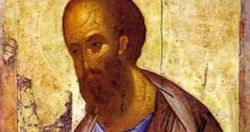
Mosaic of Apostle Paul
An Introduction
By Marshall Beeber
The entire theme of the epistle is built around the word "better", which is used in a series of comparisons to show how God's revelation in Messiah Yeshua (Christ Jesus) is superior to the revelation that came through the law, especially as the law was applied through the Levitical priesthood. The revelation quality and validity of the law for it's own time is not denied at all; on the other hand, much of the argument of Hebrews is founded in the Tenach. The new revelation has superseded the old, the coming of the new has made the old its subject.
As Messianic Jewish (Hebrew Christian) believers we are drawn in obedience to Yeshua and the New Covenant. We must distinguish between the new path that we are commanded to, and the old one. The Apostle Paul himself understood that unwillingness to obey the new revelation would be fatal to spiritual progress. It is only through the teachings of "God's unmerited love" or "grace" that we are freed from the burden of sin and guilt. It is also only through His grace that we are enabled to love one another (both Jew and Gentile in Messiah). Only with this foundation of grace are we enabled to worship the Lord in our Jewish custom without stumbling in our own self sufficiency
(Please note: this particular study is not meant to slight non-Jewish believers in the Messiah Yeshua. It's historical context was a message of exhortation to Messianic Jewish brethren within the Body of Messiah. With the inclusion in this study of the books of Romans, Galatians and Ephesians, a beautiful picture of God's plan of redemption for "all mankind" is revealed.)
Outline:
I. The Better Messenger: The Son (Hebrews 1:1-2:18)
2. The Better Apostle (Hebrews 3:1-4:13)
3. The Better Priest (Hebrews 4:14-7:28)
4. The Better Covenant (Hebrews 8:1-9:28)
5. The Better Sacrifice (Hebrews 10:1-31)
6. The Better Way: Faith (Hebrews 10: 32-12:29)
7. The Conclusion: The Practice of Faith (Hebrews 13:1-25)
Content
The Book of Hebrews was intended to encourage Messianic Jews (Hebrew Christians) living in the Diaspora who were tempted to abandon their faith because of the pressure of persecution and because of their attachment to the older revelation of the law. The writer, who is thought to be either Paul or Barnabas, showed them that the same God who delivered the law to Moses by the hand of angels has since spoken historically in His Son, who was made temporarily lower than the angels in order that He might enter perfectly into the sphere of human life as a participant in it (2:9, 10, 14-18). Because He is both divine and human.
He is qualified to serve as the high priest, in which capacity He is superior to the Aaronic priesthood. Death cannot terminate His tenure (7:24), and His sphere of service is in the heavenly sanctuary, the very presence of God (9:11-12). Furthermore, the sacrifice that He offers does not need to be repeated. He Himself is the offering as well as the priest, completely acceptable to God. The eternal salvation which He has thus purchased is attainable by faith, the same kind that was exercised by the men of the Old Covenant, who were the spiritual leaders of their generation. This faith applied under the conditions in which the believers were living, would bring them assurance, endurance, and the ultimate entrance into the unshaken kingdom.
Progressive warning may be found in the list of perils besetting the believers. The list of perils is:
· neglect, or drifting away from the true faith (2:1-4)
· the peril of unbelief (3:7-19)
· the peril of disobedience (4:11-13)
· the peril of immaturity (5:11-6:12)
· the peril of rejection of faith(10:19-31)
· the peril of refusal of obedience(12:25-29)
Parallels with the warning which appear periodically in the text are exhortations to add a positive quality to the argument:
· Let us fear (4:1)
· Let us therefore give diligence to enter (4:11)
· Let us hold fast our confession (4:14)
· Let us draw near...to the throne of grace (4:16)
· Let us press on to perfection (6:1)
· Let us hold fast the confession of our faith (10:22)
· Let us consider one another (10:24)
· Let us lay aside every weight (12:1)
· Let us run the race (12:1)
· Let us have grace (12:28)
· Let us therefore go forth unto him (13:13)
· Let us offer up sacrifice of praise (13:15)
Evaluation:
The greatest single value of the book of Hebrews is it's teaching on the present ministry and priesthood of Messiah Yeshua. There are many references in the New Covenant scriptures, but none explains what He is now doing, except the books of Hebrews and Romans.
Doctrinally the book of Hebrews accords with the Pauline epistles. Its theme is of salvation by faith in the atoning sacrifice of Yeshua. By its warnings and exhortations it seeks to show what faith is, how it functions and what results it achieves. The book of Hebrews along with Romans and Galations forms a trilogy explaining the heart and essence of the believer's walk of faith.
(This study has been adapted from "New Testament Survey", by Merrill C. Tenney, Wheaton College, Wheaton, Illinois)